Grid access dispute lands in court: Mulilo challenges Eskom over reallocation to Scatec projects

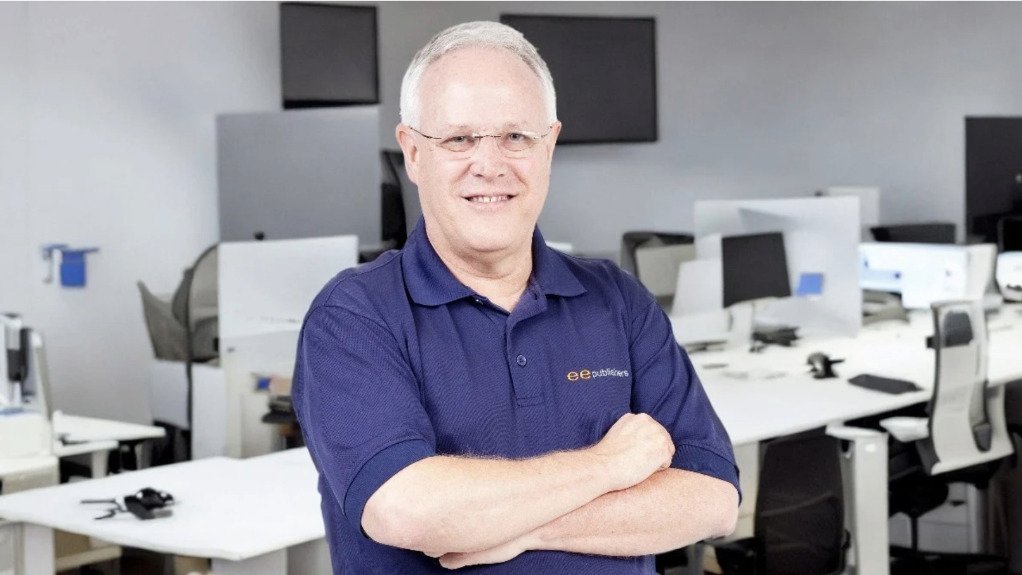



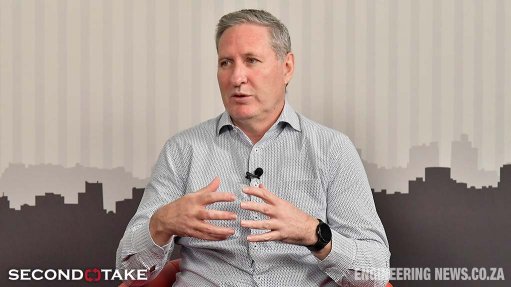
In this article, EE Business Intelligence MD Chris Yelland writes that a legal dispute now before the courts highlights a rapidly emerging fault line in South Africa’s energy transition: intensifying competition among renewable energy developers for scarce grid connection capacity.
The case – Mulilo Renewable Energy vs Eskom Holdings and Others (Case No. 2025-212230) – is being heard in the High Court, Gauteng Division, Johannesburg.
At issue is Eskom and the National Transmission Company of South Africa’s (NTCSA's) decision to cancel previously allocated grid access for a 240 MW privately procured solar PV project and reallocate that capacity to publicly procured Renewable Energy Independent Power Producer Procurement Programme Bid Window 7 projects associated with Norwegian developer Scatec.
Following a hearing late last year, the High Court granted an interim interdict on December 5, 2025, in favour of Mulilo, restraining Eskom and NTCSA from using the disputed capacity, pending determination of the main application. The court directed that the substantive relief sought in Part B must be heard by no later than June 30, 2026.
While centred on a specific project, the dispute reflects a broader systemic challenge: transmission constraints are increasingly shaping – and in some cases distorting – renewable energy development.
THE DISPUTED GRID CAPACITY
The litigation concerns 240 MW of transmission capacity previously reserved for Mulilo’s Nepal solar PV project.
Mulilo contends it had secured grid access approval from Eskom and NTCSA, and that Eskom’s subsequent attempt to cancel and reallocate that capacity – to the Leeuwspruit Solar 1, Oslaagte Solar 2 and Oslaagte Solar 3 projects linked to Scatec – was unlawful.
Mulilo approached the High Court for urgent relief, citing Eskom, NTCSA, the National Energy Regulator of South Africa (Nersa), Scatec and the associated independent power producer project companies as respondents. The court granted an interim interdict preventing reallocation of the capacity pending resolution of the main dispute.
ESKOM’S JUSTIFICATION
Eskom’s case rests largely on the allegation that Mulilo failed to register its project with Nersa within required timeframes, causing the grid reservation to lapse.
However, the regulatory framework is not always clear-cut. Privately procured projects must be registered with Nersa, while publicly procured projects require licensing – but the timing and sequencing of these processes are not always well defined.
This lack of clarity appears central to the dispute. Mulilo maintains that its grid rights remain valid and that Eskom’s cancellation was unlawful.
ESKOM SEEKS LEAVE TO APPEAL
Eskom has applied for leave to appeal the interim interdict, reportedly arguing that the ruling could have far-reaching implications for both public procurement programmes and privately developed projects.
Notably, Scatec has not joined the appeal and has indicated its willingness to proceed directly to the Part B hearing.
Leave to appeal has not yet been granted, and the interim interdict remains in force. The hearing of the main application has since been brought forward and set down for April 9 and 10, 2026.
GRID CAPACITY AS THE NEW CONSTRAINT
The case underscores a fundamental shift: grid capacity has become one of the most constrained and contested resources in South Africa’s energy transition.
While renewable plants can often be developed relatively quickly, connecting them to the transmission network is increasingly difficult. Key regions – notably the Northern Cape and parts of the Free State – are approaching grid saturation.
Applications for grid access now far exceed available capacity, while transmission expansion has lagged. As a result, grid access approvals have become critical commercial assets that can determine whether projects proceed or fail.
RISING LEGAL CONTESTATION
The Mulilo case is among the clearest indications yet that grid access disputes are moving into the courts. Similar tensions are emerging wherever multiple developers compete for limited capacity.
Developers have raised concerns about uncertainty in allocation processes, inconsistent application of project milestones, and the risk of losing grid reservations due to regulatory delays beyond their control.
With billions of rands at stake, these issues are becoming increasingly contentious, while system operators must balance competing claims within a constrained network.
IMPLICATIONS FOR THE ENERGY TRANSITION
The outcome of the case could shape the rules and dispute resolution processes governing grid access going forward.
A key question is under what circumstances, conditions and due processes Eskom or NTCSA may cancel previously granted grid reservations. If such decisions lack clear, transparent rules, disputes escalate into litigation, projects get delayed, and investor confidence is undermined.
Conversely, if reservations are too difficult to revoke, capacity may be locked up by stalled projects, preventing others from connecting.
The case may also highlight the need for greater clarity in Nersa’s registration and licensing processes. Delays outside developers’ control can have material consequences where grid access is contingent on regulatory milestones.
At a broader level, the dispute comes at a time when South Africa is transitioning towards a more independent transmission system operator under NTCSA. Confidence in the fairness, consistency and independence of grid allocation decisions will be critical.
A WARNING SIGN FOR THE SECTOR
The Mulilo–Eskom–Scatec dispute may prove to be an early indicator of a wider trend.
South Africa is planning significant renewable energy expansion, but without accelerated transmission investment – particularly in high-resource regions – grid capacity will remain a binding constraint.
As that constraint tightens, disputes over access are likely to increase, with allocation decisions playing an ever more decisive role in determining which projects proceed.
For investors, developers and policymakers, the lesson is becoming increasingly clear: building renewable power plants may be easier than securing the transmission capacity needed to connect them to the grid.
The High Court’s decision in this case may therefore become an important early test of how South Africa manages growing competition for access to its electricity network.
Article Enquiry
Email Article
Save Article
Feedback
To advertise email advertising@creamermedia.co.za or click here
Research Reports

Projects

Latest Multimedia

Latest News

Showroom
ZF Aftermarket is the after-sales division of the world-renowned German ZF group, a global leader in mobility technology.
VISIT SHOWROOM
CSIR International Convention Centre (CSIR ICC) - the leading conference and events venue in Pretoria/Tshwane.
VISIT SHOWROOM
Press Office
Announcements
What's On
Subscribe to improve your user experience...
Option 1 (equivalent of R125 a month):
Receive a weekly copy of Creamer Media's Engineering News & Mining Weekly magazine
(print copy for those in South Africa and e-magazine for those outside of South Africa)
Receive daily email newsletters
Access to full search results
Access archive of magazine back copies
Access to Projects in Progress
Access to ONE Research Report of your choice in PDF format
Option 2 (equivalent of R375 a month):
All benefits from Option 1
PLUS
Access to Creamer Media's Research Channel Africa for ALL Research Reports, in PDF format, on various industrial and mining sectors
including Electricity; Water; Energy Transition; Hydrogen; Roads, Rail and Ports; Coal; Gold; Platinum; Battery Metals; etc.
Already a subscriber?
Forgotten your password?
Receive weekly copy of Creamer Media's Engineering News & Mining Weekly magazine (print copy for those in South Africa and e-magazine for those outside of South Africa)
➕
Recieve daily email newsletters
➕
Access to full search results
➕
Access archive of magazine back copies
➕
Access to Projects in Progress
➕
Access to ONE Research Report of your choice in PDF format
RESEARCH CHANNEL AFRICA
R4500 (equivalent of R375 a month)
SUBSCRIBEAll benefits from Option 1
➕
Access to Creamer Media's Research Channel Africa for ALL Research Reports on various industrial and mining sectors, in PDF format, including on:
Electricity
➕
Water
➕
Energy Transition
➕
Hydrogen
➕
Roads, Rail and Ports
➕
Coal
➕
Gold
➕
Platinum
➕
Battery Metals
➕
etc.
Receive all benefits from Option 1 or Option 2 delivered to numerous people at your company
➕
Multiple User names and Passwords for simultaneous log-ins
➕
Intranet integration access to all in your organisation